
If you are missing teeth, you may be wondering, “How many teeth can one implant replace?” Dental implants have revolutionized modern tooth replacement by providing a permanent, durable, and natural-looking solution. Unlike traditional bridges or dentures, dental implants integrate with your jawbone, offering exceptional stability and longevity.
But do you need an implant for every missing tooth, or can a single implant support multiple teeth? The answer depends on several factors, including bone density, oral health, and the type of implant used. This guide explores how many teeth a single implant can replace and why it might be the best choice for restoring your smile.
How Many Teeth Can a Single Implant Support?
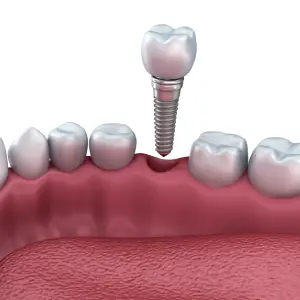
A single dental implant is the most effective solution for replacing a missing tooth. The implant, typically made of biocompatible titanium, is surgically embedded into the jawbone, where it fuses through a natural healing process called osseointegration. Once the implant has successfully integrated with the bone, a custom dental crown is placed on top, restoring both functionality and aesthetics
Why Choose a Single-Tooth Implant?
- Prevents bone loss by stimulating the jawbone and preventing deterioration.
- Preserves neighboring teeth without requiring modification of adjacent teeth like a dental bridge.
- Mimics the natural appearance of teeth, blending seamlessly with existing teeth in color, shape, and function.
- Offers long-lasting durability, with a lifespan of several decades or even a lifetime, with proper care.
Can One Implant Replace Multiple Teeth?
For individuals missing multiple adjacent teeth, a single implant may support multiple crowns as part of an implant-supported bridge. Instead of placing an implant for each missing tooth, one or two implants can anchor a bridge, reducing the number of implants required.
How Does an Implant-Supported Bridge Work?
For example, if a patient is missing 3 teeth in a row, their dentist may place two implants, one at each end, to support a three-unit bridge. This approach ensures stability and function while minimizing the number of implants required.
Advantages of an Implant-Supported Bridge
- Requires fewer implants, reducing the need for individual implants for each missing tooth.
- More cost-effective than replacing each missing tooth with a separate implant.
- Prevents jawbone deterioration by maintaining bone density in areas where teeth are missing.
- Restores full chewing ability and improves speech clarity
How Many Teeth Can Be Replaced with a Full-Arch Implant?
For patients missing an entire upper or lower arch, full-mouth dental implants provide an effective, long-term solution. Rather than placing a separate implant for each tooth, four to six strategically placed implants anchor a complete prosthetic arch.
What are All-on-4 dental implants?
All-on-4 dental implants are a full-arch tooth replacement solution that uses four strategically placed dental implants to support a complete set of replacement teeth. They can provide greater stability than traditional dentures while restoring chewing function and the appearance of your smile.
The All-on-4 and All-on-6 Dental Implant Techniques
All-on-4 and All-on-6 dental implants are advanced full-arch restoration techniques that allow patients to replace an entire set of teeth using fewer implants. These approaches can reduce the need for multiple surgical procedures while providing strong support, stability, and functionality for a complete smile.
Benefits of Full-Arch Implant Restorations
- Replaces an entire arch with only four to six implants, making it a more efficient solution.
- Minimally invasive compared to placing a separate implant for every missing tooth.
- Offers faster recovery time, allowing patients to regain functionality sooner.
- Provides a long-lasting and secure fit, eliminating the discomfort of traditional dentures.
Factors That Determine How Many Teeth One Implant Can Replace
Several factors influence how many teeth a single implant can support:
- Jawbone strength and density – A healthy jawbone ensures better implant stability and support for multiple teeth.
- Implant placement and size – The position and size of the implant affect its ability to support multiple teeth.
- Oral health condition – Healthy gums and adequate bone levels are crucial for implant success.
- Biting pressure and chewing force – The number of teeth an implant supports depends on how much pressure it must withstand.
Can One Dental Implant Replace More Than One Tooth?
If you are missing one or more teeth, dental implants provide a long-lasting and highly effective replacement option. Whether you need a single implant, an implant-supported bridge, or a full-arch restoration, dental implants provide a stable, functional, and aesthetically pleasing solution.
Book a Dental Implant Consultation Today
Are you considering dental implants? At Dental Arts of Florida in Jacksonville, FL, we specialize in customized implant solutions designed to restore your smile and improve your quality of life.
Call (904) 822-9786 today to schedule a consultation and determine the best implant solution for your needs.
FAQs
How do dental implants work?
Dental implants replace missing tooth roots with small titanium posts placed into the jawbone. As the bone heals around the implant, it creates a stable foundation for an abutment and dental crown, bridge, or denture. This allows the replacement teeth to function more like natural teeth.
How many teeth can one implant support?
A single implant can support a single tooth, multiple teeth in a bridge, or several teeth in a full-arch prosthetic, depending on the patient’s jawbone density and implant placement.
Which is better, a dental bridge or dental implant?
Choosing between a dental bridge vs. implants depends on your oral health, jawbone condition, budget, and long-term goals. Dental implants provide independent support without relying on neighboring teeth, while bridges can replace missing teeth without implant surgery. A dentist can recommend the most suitable option after an evaluation.
Can one implant replace multiple missing teeth?
Yes, a single implant can replace two or three teeth when used to support a bridge. For larger gaps, multiple implants may be required to secure a full-arch prosthetic.
Do I need one implant for every missing tooth?
No, in most cases, one implant can replace multiple teeth using implant-supported bridges or full-arch techniques. This reduces overall costs, healing time, and the number of required surgeries.
How long do dental implants last?
With proper care and maintenance, your dental implants can last a lifetime. Regular dental check-ups and good oral hygiene practices ensure long-term success.
