
What are Dental Bridges?
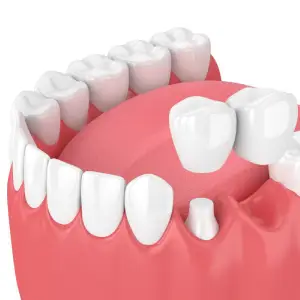
Types of Dental Bridges
- Traditional Dental Bridges: These are the most common type, consisting of one or more points held in place by crowns cemented onto adjacent teeth.
- Cantilever Bridges: Unlike traditional bridges, these are held in place by a dental crown cemented to only one abutment tooth.
- Maryland Bonded Bridge: Made of porcelain or plastic teeth supported by a metal or porcelain framework, these bridges use metal or porcelain wings bonded to the back of adjacent teeth.
- Implant-Supported Bridges: These use dental implants for support instead of crowns or frameworks, offering enhanced stability and longevity.
Pros and Cons of Dental Bridges
Pros of Dental Bridges
- Quicker Process: Bridges are faster to install than implants.
- No Surgery Required: They don’t involve surgical procedures.
- Cost-effective: Generally less expensive upfront.
- No Bone Grafting: Avoids the need for bone grafting.
- Predictable Outcome: Results are usually reliable.
- Immediate Aesthetic Improvement: Provides instant improvement in appearance.
- Suitable for Certain Medical Conditions: This can be a better option for some medical conditions.
Cons of Dental Bridges
- Impact on Adjacent Teeth: May weaken neighbouring teeth.
- Durability: Lifespan averages 5-15 years.
- Bone Loss Prevention: Doesn’t preserve jawbone health.
- Oral Hygiene Challenges: Harder to clean than natural teeth or implants.
- Natural Feel and Function: It may not feel as natural as implants.
- Potential for Recurring Treatments: May need replacement over time.
- Aesthetic Concerns: Jawbone deterioration can affect appearance.
What are Dental Implants?
Pros and Cons of Dental Implants
Pros of Dental Implants
- Natural Look and Feel: Mimics the appearance and sensation of natural teeth.
- Durability: It can last a lifetime with proper care.
- Bone Health Preservation: Helps prevent bone loss in the jaw.
- No Impact on Adjacent Teeth: Does not affect neighbouring teeth.
- Improved Oral Hygiene: Easy to maintain compared to bridges.
- Prevention of Facial Sagging: Preserves facial structure by maintaining jawbone integrity.
- No Risk of Decay in the Implant: Implants themselves are not susceptible to decay.
- Versatility: Can replace single or multiple teeth or even entire arches.
- Improved Chewing and Speaking: Provides better functionality compared to other options.
- Long-Term Cost Efficiency: Potential long-term savings due to durability.
Cons of Dental Implants
- Surgical Procedure Required: Involves a surgical process for implant placement.
- Longer Treatment Time: Requires a longer healing period and multiple appointments.
- Higher Initial Cost: Initial investment can be higher than other options.
- Potential for Complications: Risk of complications such as infection or nerve damage.
- Bone Health Requirements: Requires sufficient jawbone for successful placement.
- Not Always Covered by Insurance: May not be fully covered by dental insurance plans.
- Potential for Implant Failure: Small chance of rejection or integration issues.
- Age Considerations: Not always recommended for younger or older patients.
- Maintenance: Requires regular dental check-ups and proper oral hygiene.
- Aesthetic Variability: Gum recession can affect appearance over time.
Making Your Decision
Conclusion
FAQsx
Is the dental implant procedure very painful?
The Procedure is performed by giving local anesthesia to ensure minimal discomfort.
How Many Teeth Can One Implant Replace?
A single dental implant usually replaces one missing tooth by supporting an individual crown. However, one implant may also be used as part of a bridge to replace multiple missing teeth in certain situations. The ideal approach depends on the location of the missing teeth, jawbone health, and overall treatment plan.
What should you expect with same-day crowns?
With same-day crowns, your tooth is prepared, digitally scanned, and fitted with a custom crown during a single dental visit. The process can save time compared with traditional crowns that typically require multiple appointments. Your dentist will check the fit and bite before permanently placing the restoration.
Can anyone get dental implants?
Most individuals with good overall health are suitable candidates for dental implants.
Are dental bridges removable?
No, dental bridges are fixed in place and cannot be removed by the patient.
Do dental implants look like natural teeth?
Yes, dental implants closely mimic the look.
